
iGaming Uncovered: Slots, Poker, and Betting in 2025
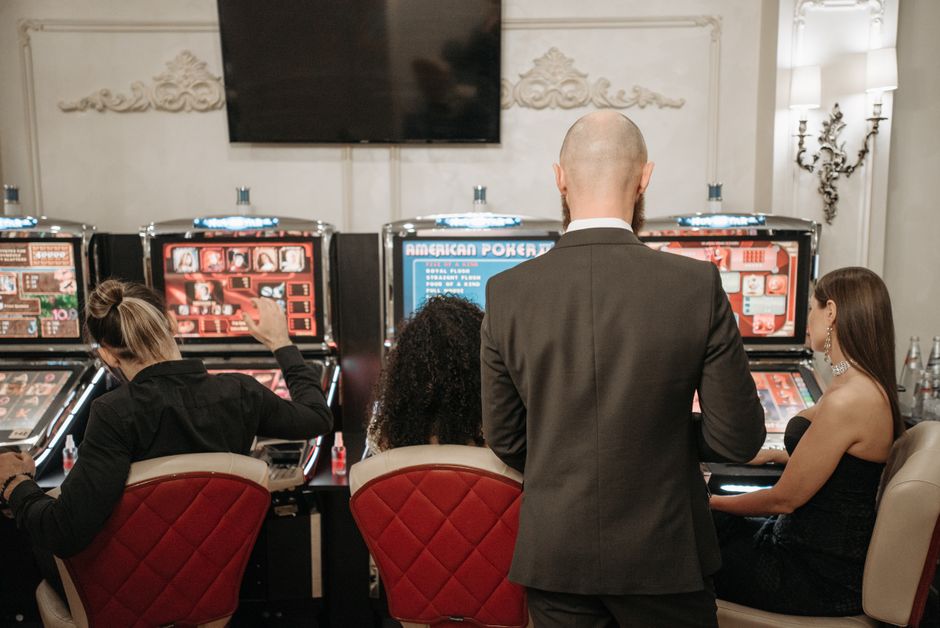
You know that adrenaline rush when your gut says the next spin is the one? Or when you're staring down a river card that could make or break your night? That's the iGaming pulse — a $100 billion industry that never sleeps. Whether you're a casual slots spinner or a poker shark who tracks pot odds in your sleep, the landscape is shifting fast. Let's cut through the hype and talk about what actually matters in 2025.
Slot Machines: Not Just for Grandmas Anymore
Forget the old three-reel mechanical monsters. Modern video slots are engineering marvels with Megaways, cluster pays, and expanding wilds that can turn a $1 spin into a five-figure payout. But here's the thing: not all slots are created equal. The RTP (Return to Player) percentage is your best friend. A slot with 96.5% RTP returns $96.50 for every $100 wagered over millions of spins — but that's a long-term average. In a two-hour session? You could hit a 500x multiplier or lose your entire bankroll. It's variance, baby.
Consider this: a 2024 study by the UK Gambling Commission found that online slot sessions average just 12 minutes. That's shorter than making dinner. Why? Because high-volatility slots like Money Train 4 or San Quentin give you either nothing or everything. Low-volatility slots like Starburst pay smaller but more often. Pick your poison based on your patience and bankroll.
Three Slot Myths You Should Ignore
- "The machine is due for a win." Slots use random number generators (RNGs) that reset every spin. No memory, no karma.
- "Max bet always pays better." Many jackpots require max bet, but base game RTP doesn't change. Read the paytable.
- "Autoplay is harmless." Autoplay can burn $200 in five minutes while you're distracted. Set loss limits before you hit start.
Poker: Where Skill Eats Luck for Breakfast
If slots are a rollercoaster, poker is chess with cards. The 2025 online poker scene is dominated by hold'em and Omaha, but the real action is in tournaments. The World Series of Poker (WSOP) online bracelets now attract over 100,000 entrants per series. Why? Because a $50 satellite can lead to a $1 million payday. But let's be real: 90% of tournament players lose money. The edge comes from position, bet sizing, and reading opponents — not from chasing gutshots. keonhacai 5 covers this in more detail.
Take a concrete example. You're in the cutoff with A♠ J♠. A tight player raises from under the gun. In 2025, solvers (AI-based poker tools) say you should fold 70% of the time here. Why? Because UTG raising ranges are strong — think AA, KK, QQ, AK. Calling with AJs is a leak that costs you 0.5 big blinds per hand over 10,000 hands. That's $500 at $1/$2 stakes. Fix the leak, buy groceries. Some of the clearest guidance on this comes from socolive.
Bankroll Rules That Actually Work
- Cash games: Never buy in for more than 5% of your total poker bankroll. $2,000 bankroll? Play $1/$2 with $100 max.
- Tournaments: Your buy-in should be 2% or less of your bankroll. A $50 tournament demands $2,500 dedicated funds.
- Stop-loss: If you lose three buy-ins in a session, quit. Tilt is the silent assassin.
Sports Betting: The Margin Game You Can't Beat (Unless You Do)
Here's the uncomfortable truth: sportsbooks build in a 5-10% margin (vigorish) on every bet. That means a coin-flip bet pays -110 instead of even money. Over time, the house wins. But sharp bettors exploit line movement and promotions. For example, DraftKings runs "odds boosts" that turn a -110 bet into +20. That's a 17% edge if the underlying probability is 50%. You don't need to win every bet — just find 55% winners on boosted lines.
The 2025 twist? AI-driven prop bets are exploding. You can bet on whether a specific player gets a yellow card, or if the first quarter ends with a score of 7-3. These markets are less efficient, meaning casual fans can find value. But beware: in-play betting during a game is where 80% of recreational bettors lose. The fast pace and emotional swings turn your brain off. Set a pre-game budget and stick to it.
Trust, Tech, and the Rise of Provably Fair
iGaming has a trust problem — and it knows it. That's why provably fair systems are becoming standard. Using cryptographic hashes, platforms like Stake and Roobet let you verify that each card shuffle or slot spin wasn't tampered with. You see a server seed, a client seed, and a nonce. Run them through a SHA-256 hash, and you get the result. It's not perfect, but it's a massive improvement over "trust us, bro."
Meanwhile, AI chatbots now handle 60% of customer support queries. That's great for password resets, terrible for complex disputes. My advice: if you have a withdrawal issue over $500, skip the bot and email support with a timestamped screenshot. You'll get a human in 24 hours — usually.
Responsible Gaming: The Part Everyone Skips
I've saved the most important section for last. iGaming is entertainment, not a retirement plan. The UK's National Health Service reports that 0.5% of gamblers develop a severe problem — that's 1 in 200. But the risk is higher for slots and in-play betting. Use these tools:
- Deposit limits: Set a hard cap per week. Most regulated sites enforce it within 24 hours.
- Reality checks: Pop-up reminders every 30 minutes. Annoying? Yes. Necessary? Absolutely.
- Self-exclusion: If you feel out of control, ban yourself for 6 months via GAMSTOP (UK) or state-level programs.
Remember: the house always has an edge. Your job is to manage your bankroll, your emotions, and your time. A $100 deposit that lasts four hours of fun is a win. A $100 deposit that lasts 20 minutes and leaves you chasing losses is a loss — regardless of the payout.
The Bottom Line
iGaming in 2025 is a kaleidoscope of slot volatility, poker solvers, boosted odds, and cryptographic fairness. The tools are better than ever, but so are the traps. Treat every session like a night out: bring only what you can afford to lose, know when to walk away, and never chase the dragon. Whether you're spinning for a Megaways miracle or bluffing a river card, the real skill is staying in control. Now go find your edge — but leave your rent money at home.